

Have you ever wondered how a steel giant can stay in the air? Aircraft structure can be understood through a diagram that fascinates not only engineers but anyone who has ever looked up at the sky. In this article, we will take the aircraft apart piece by piece. You will learn what a passenger aircraft's structure looks like and what makes a flight safe. This guide explains the technical details without unnecessary jargon. You will discover the parts of an airframe and find out how much a passenger aircraft weighs – the aircraft that takes you on holiday. Fasten your seat belt: let's explore aviation engineering!
Aircraft structure: diagrams and basic concepts
When considering aircraft design, a diagram helps explain how the parts fit together. An aircraft is more than a fuselage and wings: its airframe is the complete load-bearing structure, excluding engines and equipment. It is the framework that must withstand considerable loads and changes in pressure. Modern aircraft design follows the principle that every gram matters. When analysing aircraft construction, you will notice that in the design engineers aim for the greatest possible strength with the least possible weight. The airframe is divided into several main assemblies: the fuselage, wings, tail assembly and landing gear. Each has a different function, but only together do they keep the aircraft stable in flight.
What are the parts of an aircraft?
Aviation is easier to understand when we break an aircraft down into smaller assemblies. Here are the main parts of a typical jet.
- Fuselage – the main body that houses the passengers and crew.
- Wings – surfaces that generate lift.
- Tail assembly – the rear section used for stability and control.
- Aircraft landing gear – the wheels and associated structure used for take-off, landing and taxiing.
- Jet engine – a propulsion unit that generates thrust.
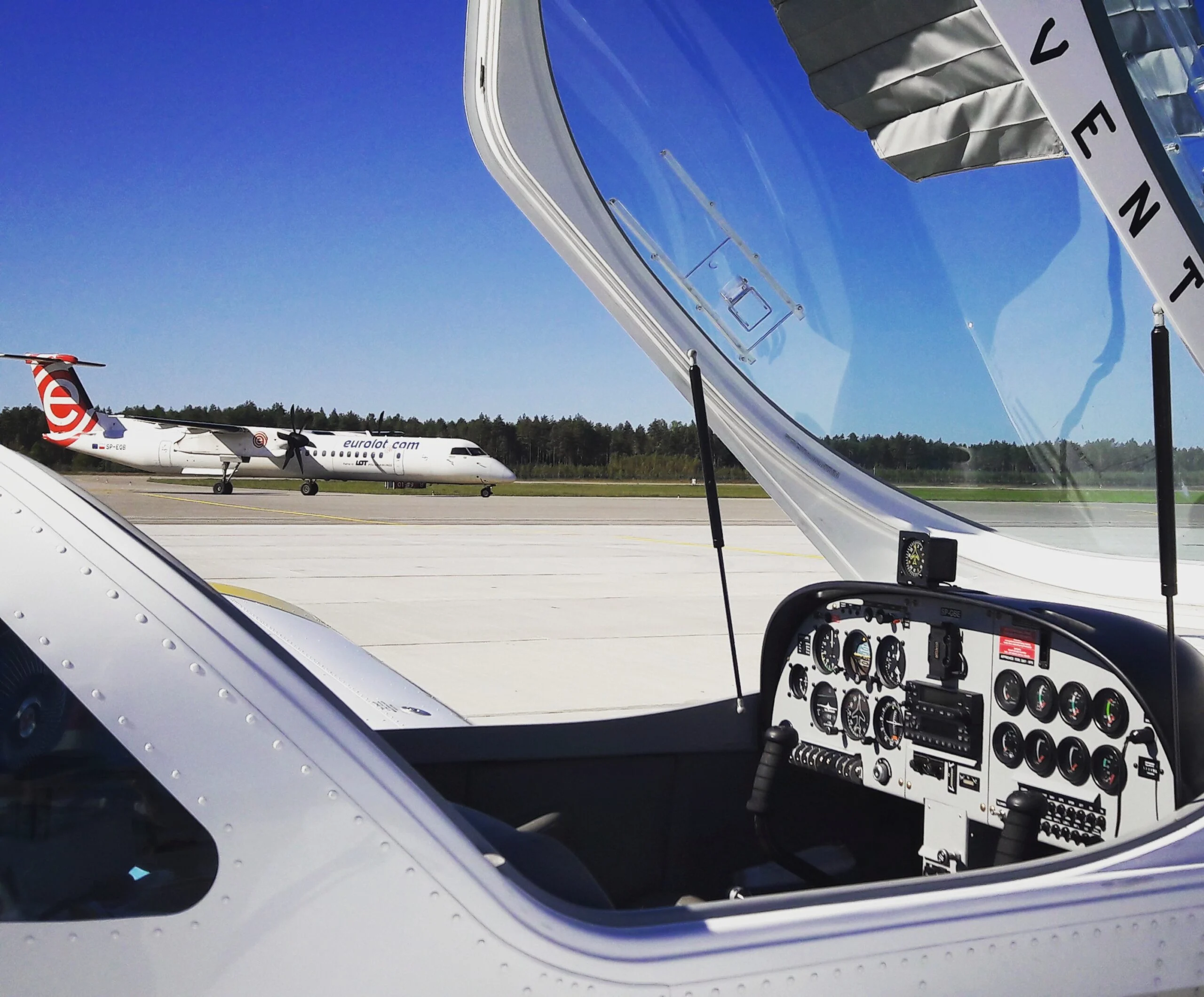
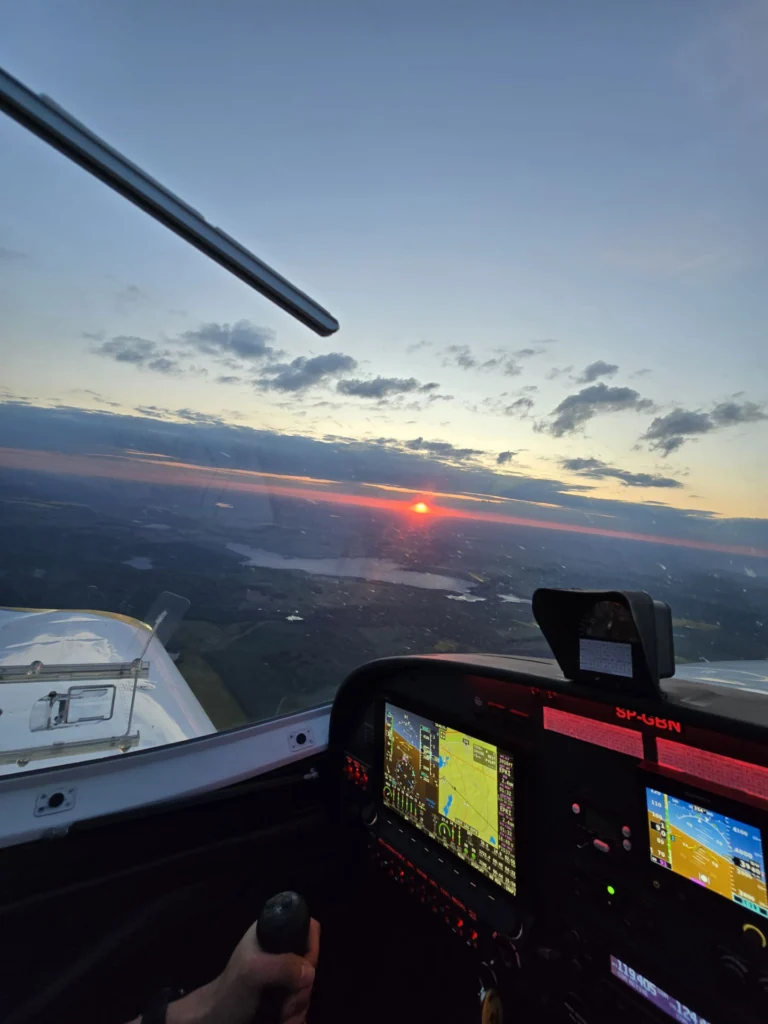
- Pilot's cockpit – the crew's workplace, containing flight-control systems and avionics.
- Ailerons – movable parts of the wings that control roll.
- Flaps – devices extended from the wings to increase lift at low speeds.
- Vertical and horizontal stabilisers – fixed tail surfaces that help maintain the aircraft's direction.
- Engine nacelle – a housing that protects the engine and improves aerodynamics.
Aircraft fuselage: the backbone
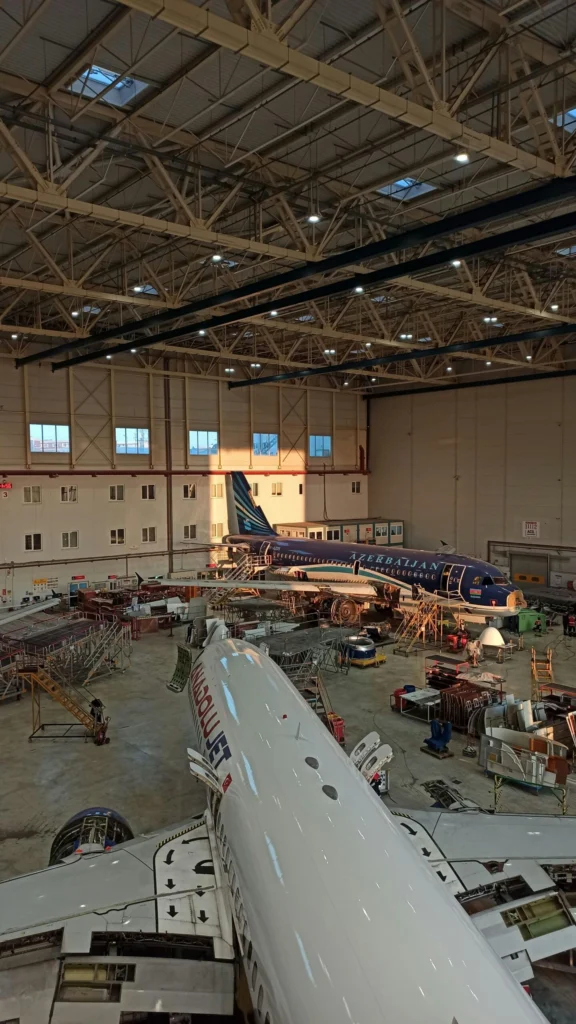
Aircraft fuselage design usually uses a semi-monocoque structure. Imagine a tube with a dense network of reinforcements inside. Its main components are frames (transverse rings) and stringers (longitudinal beams). A thin metal skin covers the structure. The fuselage houses the passenger cabin, luggage compartments and life-support systems. It must be sealed because, at an altitude of 10,000 metres, the outside pressure is too low for people to breathe. The fuselage therefore works like a balloon, continuously “inflated” from within.
Wing design and lift generation
This is where the magic of flight happens. Wing construction is highly complex. Inside are spars (the main load-bearing beams) and ribs, which give the wing its aerodynamic profile. This shape makes air flow faster over the wing than beneath it, creating a pressure difference and therefore lift. The wing also has movable high-lift devices. During take-off and landing, pilots extend the flaps, changing the wing's configuration. The main fuel tanks are also housed in the wings.
| Component | Function |
|---|---|
| Ailerons | Controlling the aircraft's bank |
| Flaps | Increasing lift during take-off and landing |
| Slots | Improving airflow at high angles of attack |
| Spoilers | Aerodynamic braking and lift dumping |
Tail assembly and landing gear: how does an aircraft steer and land?
The aircraft's tail assembly consists of stabilisers and control surfaces. The vertical stabiliser, with its movable rudder, allows the aircraft to turn left or right. The horizontal stabiliser and elevator allow it to climb and descend. The landing gear has to absorb enormous forces on touchdown. It consists of main and nose gear legs, fitted with powerful oleo-pneumatic shock absorbers and multi-ply tyres that can withstand temperatures from -50 to +200 degrees Celsius. Hydraulic systems retract the landing gear.
What are aircraft made of? Materials and technology
Aircraft were once made of wood and fabric; today, metals and composites dominate. Aviation-grade aluminium alloys containing copper and magnesium are still the basis of most aircraft structures. They are light, strong and corrosion-resistant. Titanium is used in areas exposed to the highest temperatures, such as around the engines. Modern passenger aircraft rely increasingly on carbon-fibre composites. They are stiffer than steel and lighter than aluminium, helping aircraft use less fuel and fly longer routes.
How much does a passenger aircraft weigh? Examples
An aircraft's mass depends on its purpose. In aviation, we distinguish between empty mass and maximum take-off mass (with fuel and passengers on board).
| Aircraft model | Empty mass (kg) | Maximum take-off mass (kg) |
|---|---|---|
| Cruiser PS-28 | 388 | 600 |
| Cessna 172 | 767 | 1,157 |
| Tecnam P2006T | 860 | 1,230 |
| Boeing 737-800 | 41,413 | 79,015 |
| Airbus A380 | 276,800 | 575,000 |
What we have learned about aircraft structure
Understanding aircraft construction helps us appreciate the engineers who work to keep us safe. Aviation is a system of interdependent parts, from precise cockpit avionics to powerful jet engines.
We hope this guide has answered your questions and that next time you look at a wing through the window, you will know exactly what is happening. Understanding how an aircraft works is the first step towards a more relaxed journey. If you dream of taking the controls yourself, read our advice on what flight training looks like.
Discover the aircraft you will fly
Would you like not only to understand how an aircraft is built, but also to take the controls yourself? Explore the ATPL training programme at Ventum Air and start working towards a career as a professional pilot.