

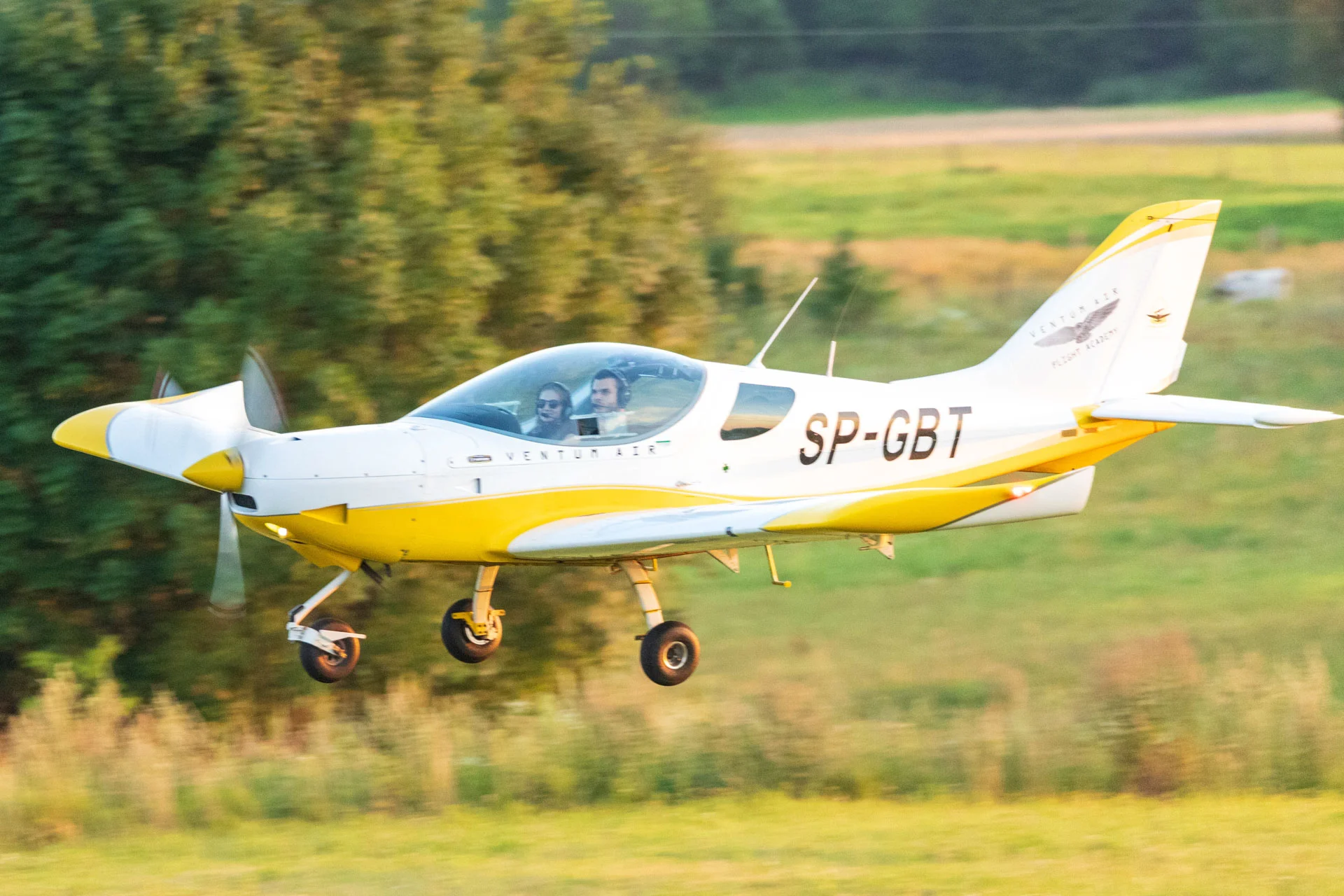
The route to an airliner cockpit demands discipline, precision and hundreds of hours of study. When training draws to a close, aviation students face one final challenge: the final exams. In reality, this is not a single event but a two-stage assessment of competence that separates enthusiasts from professionals.
This article explains how your knowledge and skills are assessed and how best to prepare for the final stage of your journey towards a licence.
Theory: 13 steps towards professionalism
Before taking the practical exam, you must prove that your theoretical knowledge is complete. ATPL pilot training (Airline Transport Pilot Licence) covers 13 subjects, each ending with an exam at the Polish Civil Aviation Authority (ULC).
What happens during an LKE exam session?
The exams are administered by the Polish Civil Aviation Authority's examination board (LKE). Candidates answer multiple-choice questions in English, in line with EASA standards. The subjects cover a wide range of knowledge, from air law and meteorology through flight planning to complex topics in aircraft systems and navigation.
- Pass mark – 75% in each subject.
- Time limits – exam sessions are divided into blocks, and candidates have a fixed number of sittings in which to pass every module.
- The challenge – this is a test of perseverance. The systematic study required by professional ATPL pilot training is essential if you are to navigate the many regulations and procedures successfully.
The practical exam (Skill Test): the moment of truth in the air
After successfully completing theory training and logging the required hours, it is time for the Skill Test. This is an examination flight with a state-authorised examiner, who assesses your ability to operate the aircraft safely and accurately.
Pre-flight briefing
The exam begins not in the cockpit but in the operations room. The examiner checks your preparation for the planned flight.
- Weather analysis – interpreting METAR and TAF reports and significant weather charts (SIGWX).
- Performance calculations – checking take-off and landing distances for the current conditions.
- Route planning – accounting for restricted areas and arrival procedures.
The flight
During the flight, the examiner does not offer hints. They act as an observer and as a passenger whose safety is your responsibility. During the exam that concludes ATPL training, the areas assessed include:
- standard operating procedures (SOPs) – whether you can use checklists flawlessly;
- instrument flight (IFR) – maintaining precise flight parameters without visual reference to the ground;
- emergency situations – simulated engine failures, aircraft-system faults and loss of communications;
- CRM (Crew Resource Management) – decision-making and cockpit resource management skills.
An important point – the examiner is not looking for an infallible pilot, because no such pilot exists. They are looking for someone who notices an error in time, corrects it and prevents it from threatening flight safety.
How can you handle the exam and succeed?
Managing stress, an inherent part of aviation work, is primarily a matter of over-preparation: preparing beyond the absolute minimum. Rather than relying on improvisation, use thorough mental rehearsal and visualise procedures on the ground. This helps movements become automatic before you sit in the pilot's seat. The foundation of success in a Skill Test remains strict adherence to established standards and operating instructions. A state exam is the time to demonstrate professional discipline, not aviation creativity. Do not overlook the ordinary but important matter of recovery, either. Proper rest before an exam session at the ULC can be worth more than litres of caffeine, giving you the mental clarity needed to maintain the highest level of situational awareness.
Summary
The final exam symbolically closes the student stage and opens the door to an airline career. Although the requirements are demanding, properly delivered ATPL training gives you every tool you need to approach the process with confidence.
Remember that a pilot licence is not merely a qualification: it is a commitment to continuous learning. The final exam is simply the first of many assessments that will shape your career in the air.
Ready to fly higher? Explore our range of Ventum Air training courses and begin your journey today.
The exam is only the beginning of a career in aviation
Want to prepare for theory and practical exams with instructors who have airline experience? Explore the ATPL training programme and begin your route towards professional flying.